Insider Threats: How to Secure Your Sensitive Data Against Internal Risks
The Trusted Employee is Your Biggest Vulnerability
We spend massive time building digital walls against outside hackers. We heavily invest in external security, and we often assume all danger is outside the gate. However, the biggest threat to your company’s assets is often already signed in and sitting at their desk. This is the simple, dangerous truth of the insider threat. These threats are complex. They can be malicious actors planning corporate theft, but they can also be careless employees who simply fall for a phishing email. Ignoring this risk leaves your most sensitive information exposed. Successfully preventing insider threats to sensitive data requires a major shift in thinking. You must assume every employee is a possible point of failure. Therefore, put systems in place to manage that risk, as a result, turning a vulnerability into strong protection.
The Unseen Risk: Negligence is Not Bliss
An insider threat is any risk from a person who has authorized access to your systems and assets. The malicious insider makes for big headlines. Still, most security incidents start with simple human error. Research confirms this: human error, whether intended or not, is the main factor in most breaches. You cannot fire everyone who makes a mistake. And you can certainly stop relying on luck. This, indeed, is the difference between hoping for security and building it right.
A careless insider might accidentally misconfigure a cloud server. They might also email confidential files to the wrong person. These actions are not malicious, of course. Despite that, they cause the same huge data exposure. This is why your security plan must focus on minimizing the impact of both intentional theft and accidental slip-ups.
Your New Security Motto: Never Trust, Always Verify
The solution to an insider problem is simple: abandon the old “castle-and-moat” security model. That model failed the moment an authorized user got past the front door. The modern standard is Zero Trust Architecture (ZTA). To begin with, ZTA assumes no user, device, or network part is trustworthy by default, no matter its location.
Zero Trust works by imposing constant, rigorous verification. It only grants access to specific resources. For example, this continuous monitoring stops an infected or stolen account from moving freely through your network. In essence, this framework is vital because it limits the damage of any internal breach. Specifically, it turns a potential company disaster into a small, contained problem. You must implement micro segmentation. This divides the network into small, secure zones. Ultimately, it gives specific resources their own unique security borders.
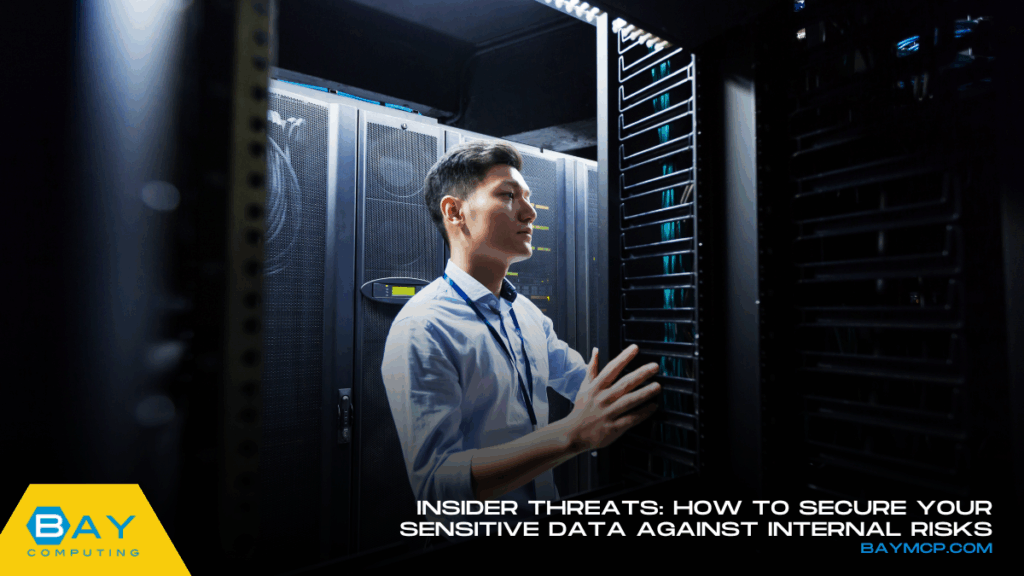
Three Defenses to Secure Sensitive Data
Truly effective internal security relies on three things: technology, policy, and training. These three steps build a strong defense layer.
1 . Implement the Principle of Least Privilege (PoLP). This policy says users and applications are only granted the minimum access needed for their jobs. A marketing specialist does not need access to the executive financial database. In this way, if an account is compromised, the attacker can only reach the data tied to that account’s essential duties. This smart control is a powerful tool in your IT security arsenal.
2 . Deploy advanced monitoring tools. Agencies like CISA stress the need for continuous User Behavior Analytics (UBA) to detect unusual activity. An employee logging into the file server at 3 a.m. from an odd location should flag an alert. As a matter of fact, the system is designed to catch concerning behaviors before they cause a damaging incident. The Cybersecurity and Infrastructure Security Agency (CISA) provides excellent guidance on developing a holistic insider threat mitigation program.
3 . Remember that technology is only as strong as your people. Regular, engaging employee training is a must. Education minimizes those “accidental” incidents. More importantly, it turns every employee into a conscious defender of company data.
Securing Your Digital Future with Bay Computing
Dealing with internal risk demands care and sophisticated tools. It is a complex process. It involves everything from updating policies to deploying granular access controls. However, many organizations lack the resources to manage these threats effectively.
Bay Computing specializes in helping businesses navigate this challenge. We can ensure your systems follow best practices, whether you are in the Boston tech sector, manage client data throughout Massachusetts, or serve customers across the US. We deliver proactive cybersecurity solutions and comprehensive Managed IT Services. These are designed to protect revenue and ensure compliance. Furthermore, they allow your team to focus on business goals rather than IT headaches.