Navigating Bay Area Broadband and Fiber Options for Maximum Business Speed
When your business grows, the “spinning wheel of death” during a video call isn’t just a minor annoyance; it’s a productivity tax. We have all been there: being in an online call to present a high-stakes deck while the office Wi-Fi decides to take a sabbatical. In the modern workspace, bandwidth is no longer a luxury. It is the nervous system of your operations. If your connection is sluggish, your entire team is essentially trying to run a marathon through waist-deep molasses.
The Velocity Gap: Why Settling is Costly
Many business owners view their internet connection as a utility, much like water or electricity. You pay the bill, and the light stays on. But unlike electricity, internet quality is a spectrum. Relying on an aging copper broadband connection while your competitors move to dedicated fiber is like trying to win a Formula 1 race in a minivan. High-speed connectivity is the ultimate bridge between your current goals and your team’s ability to execute them.
Broadband vs. Fiber: More Than Just Speed
The choice often comes down to shared broadband versus dedicated fiber. Broadband is like a public highway. It is fast until everyone else decides to use it at the same time. Fiber, specifically dedicated internet access (DIA), is your own private express lane. While broadband download speeds are often fast, the upload speeds are usually a crawl. Fiber offers symmetrical speeds, meaning uploads are just as fast as downloads. For businesses relying on cloud backups, that upload speed is the secret sauce for a seamless workflow.
Navigating the Provider Jungle
Picking a provider feels a lot like choosing a restaurant in a tourist trap. Everyone promises the best meal, but few actually deliver on that claim. Most national carriers lead with a teaser rate that looks great on a spreadsheet but hides restrictive data caps or lackluster service agreements. When evaluating options, the real value isn’t found in the marketing pamphlet. It is in the uptime guarantee. If your provider doesn’t offer a financially backed SLA, you aren’t a customer; you’re a gambler.
Future-Proofing Your Infrastructure
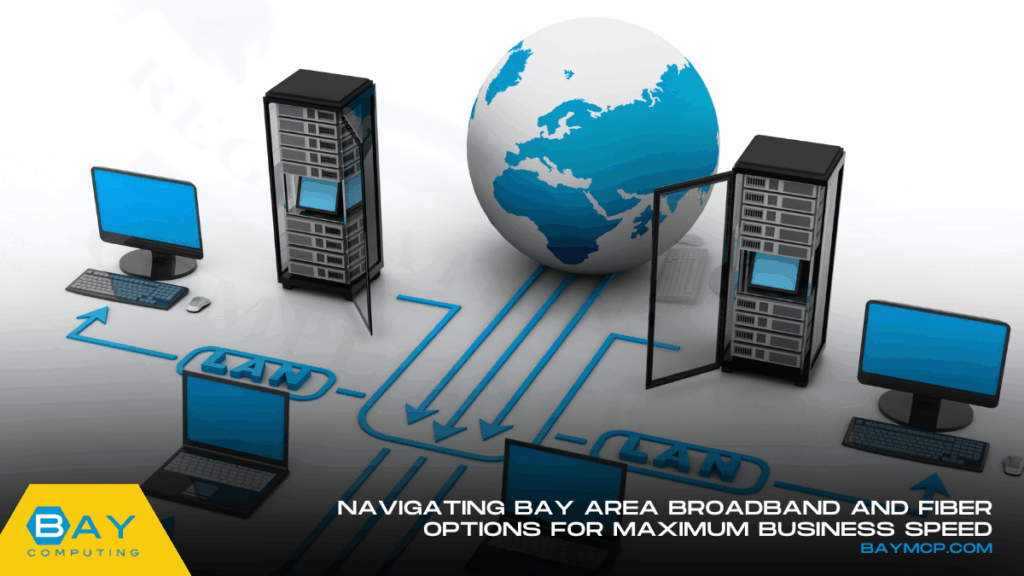
Technology moves fast, and staying future-ready means building a network that can handle what is coming next. We are seeing a massive shift toward AI-integrated workflows and heavy data processing. These tools don’t just need a connection. They need a high-capacity pipeline. Investing in modern fiber infrastructure today prevents the costly, reactive emergency upgrades of tomorrow. You want a foundation that scales with your ambition, not one that acts as a ceiling.
The Security-Speed Paradox
There is a common misconception that faster speeds lead to greater security risks. In reality, the opposite is often true. Legacy connections are harder to monitor and lack the modern encryption support that fiber hardware provides. A reliable network allows for real-time cybersecurity monitoring without dragging down your performance. Speed and security should be a partnership, not a compromise. When your network is optimized, your defense layers can run at full throttle without your users even noticing.
Why Your “Gigabit” Might Be Lying
Consumer-grade Gigabit plans are the ultimate marketing fluff. Providers often bury the phrase up to in the fine print of their contracts. For a business, up to is a dangerous term. You need a guaranteed floor, not a theoretical ceiling. True business-class fiber ensures that your bandwidth stays consistent regardless of what the neighbors are doing. If you aren’t getting the speed you’re paying for, it’s time to stop settling for “good enough” IT.
The National Digital Landscape
Broadband availability varies wildly across the country. In some regions, you have a buffet of fiber options; in others, you’re stuck with a single provider holding all the cards. Navigating this landscape requires a strategic partner who understands the local geography of fiber maps and the technical nuances of deployment. Whether you are managing a single site or a distributed network of offices, the goal remains the same: reliable, high-capacity access that just works.
The Northeast Connection: A Case Study in Density
The complexity of these networks becomes even more apparent in high-density regions like the Northeast. In markets across Massachusetts and the Greater Boston area, the challenge isn’t just finding a provider; it’s picking the right one from a crowded field. Navigating the maze of local infrastructure and national carriers in cities like Boston requires more than just a search engine. It requires local insight into which lines are actually reliable in the Bay Area.
Strategic Insight for Massachusetts Businesses
At Bay Computing, we help companies in the Boston area and across the country cut through the noise. We find the connections that actually fuel growth rather than stalling it. We understand that your business doesn’t have time for downtime, especially in a market as fast-paced as ours. By matching your specific operational needs with the best available local infrastructure, we ensure your tech is an engine, not an anchor.
Taking the Lead on Your Tech
Your internet connection shouldn’t be an afterthought or a source of frustration. It should be a competitive asset that empowers your people to do their best work. If you are tired of playing reboot the router or wondering why your cloud apps are lagging, it’s time for a professional assessment. From broadband infrastructure to fiber optic standards and speed benchmarks, we ensure your business stays ahead of the curve. Reach out to Bay Computing today, and let’s get your speed caught up to your vision.